From Impression to Lead: Internal Linking for AI-Feature Pages. Rancang internal link dari jawaban informasional menuju layanan relevan. Ukur jalur baca tanpa klaim konversi. Answer: define intent, source, test, and impact before a decision.
Link path design: definition and boundary
Separate platform facts from editorial recommendations. An article can link to definition, proof, and scoped service in that order. This article block records its concrete input, review method, expected output, owner, evidence location, and stop condition so another operator can repeat the check. Include the source date, file version, approval note, and recovery path. Record the date, owner, and stop condition.
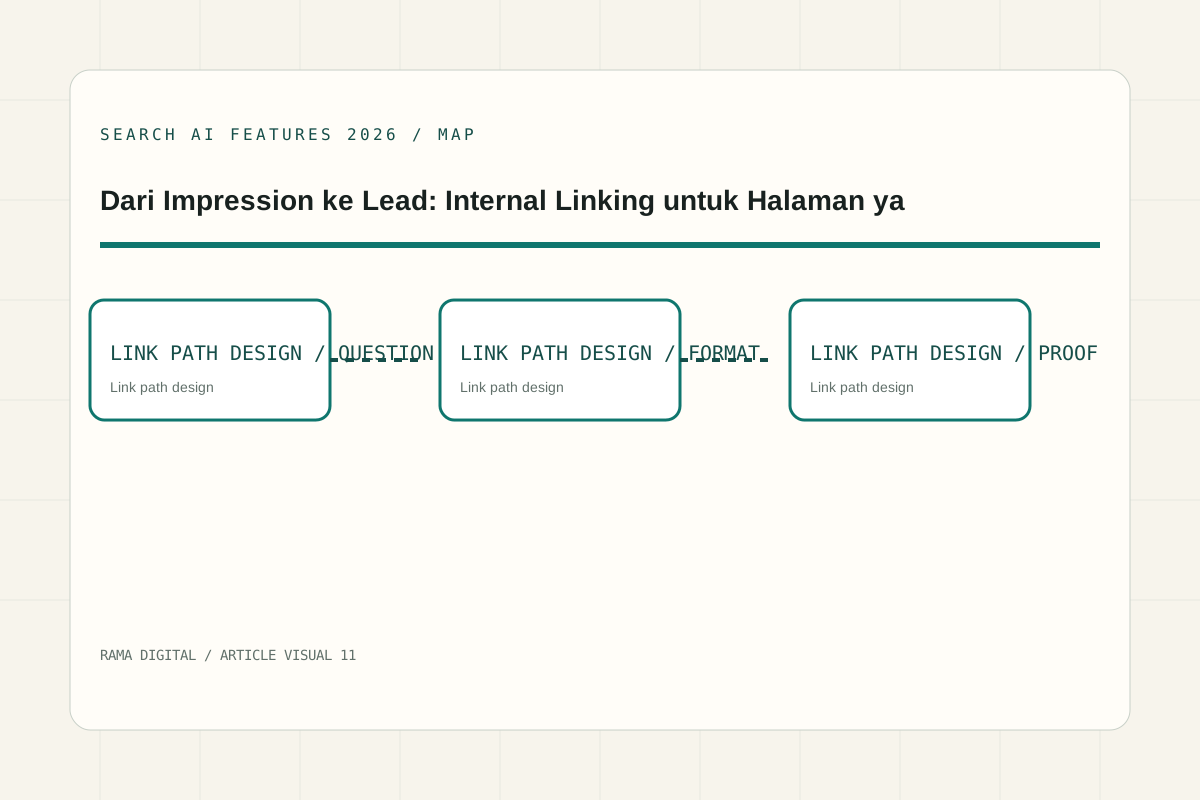
Link path design: inputs and process
Add a link when its anchor explains the destination. Keep the evidence traceable, compare it with the baseline, and record the next action before scope expands. State which signal would invalidate the decision and who can reverse it. Use 1 main variable and keep an auditable baseline.
Link path design: working example
Select 1 page, asset, or task. Record input, change, consent, event, cost, and output. Mark missing data.
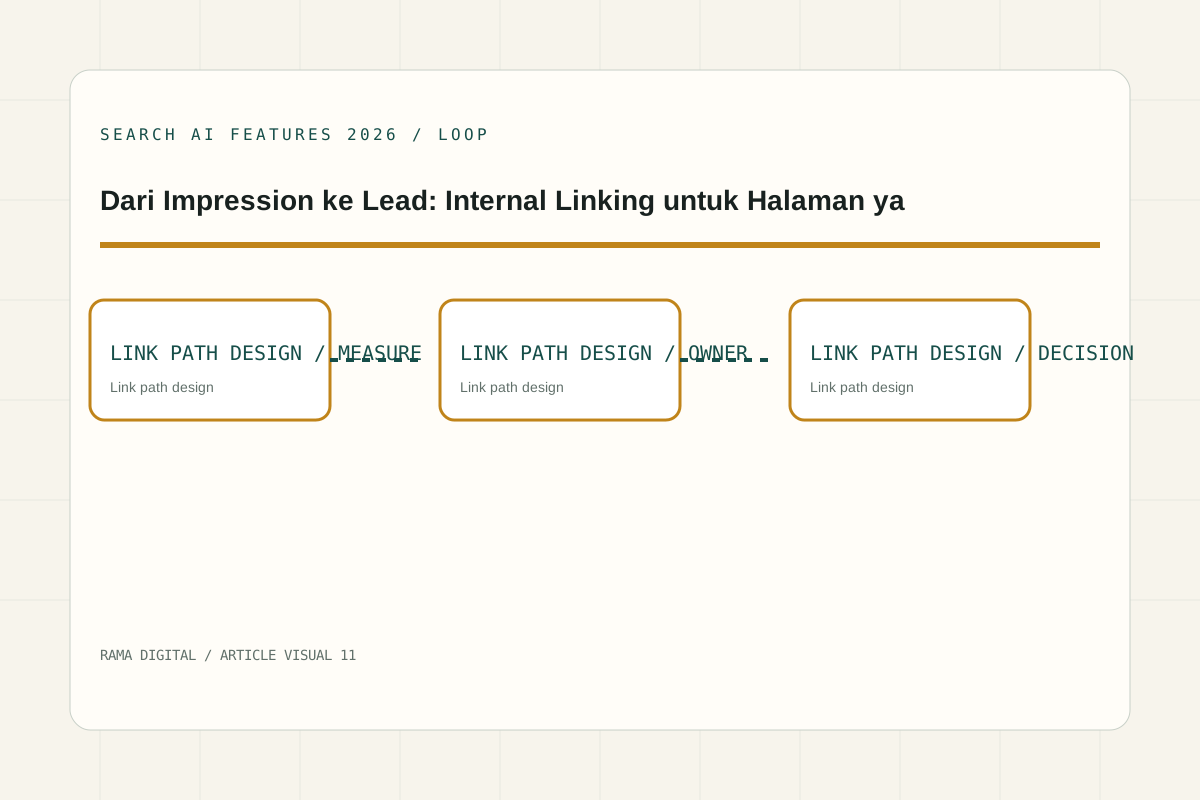
Link path design: decisions and risks
Review signal quality, review time, and pipeline impact. Choose continue, correct, or stop. Do not treat an impression as a sale.
Link path design: checklist
- State intent.
- Place sources.
- Label assumptions.
- Assign an owner.
- Test a small scope.
- Record limits.
- Write a stop rule.
Link path design: sources and CTA
Read Google AI features, Google AI optimisation guide, Google helpful content. See the SEO and GEO guide, the Search Console guide, and AI SEO & GEO Training. For ads, use Meta Ads Management.
Link path design: definition link
At the definition link stage, From Impression to Lead: Internal Linking for AI-Feature Pages uses inspectable inputs and produces a record for the next stage. Assign an owner, access boundary, and comparison sample. Decision 1 must follow this rule: Add a link when its anchor explains the destination. Keep the evidence traceable, compare it with the baseline, and record the next action before scope expands. State which signal would invalidate the decision and who can reverse it. A risk that cannot be reversed needs human approval. Record the value before the change and why you chose it. Ask for a second review when risk touches a customer. Store the output, change reason, and stop condition in the same record. Check the result before expanding scope.
Link path design: proof link
At the proof link stage, From Impression to Lead: Internal Linking for AI-Feature Pages uses inspectable inputs and produces a record for the next stage. Assign an owner, access boundary, and comparison sample. Decision 2 must follow this rule: Add a link when its anchor explains the destination. Keep the evidence traceable, compare it with the baseline, and record the next action before scope expands. State which signal would invalidate the decision and who can reverse it. A risk that cannot be reversed needs human approval. Compare it with a real sample from the same period. Keep evidence in a folder with an owner. Store the output, change reason, and stop condition in the same record. Check the result before expanding scope.
Link path design: service link
At the service link stage, From Impression to Lead: Internal Linking for AI-Feature Pages uses inspectable inputs and produces a record for the next stage. Assign an owner, access boundary, and comparison sample. Decision 3 must follow this rule: Add a link when its anchor explains the destination. Keep the evidence traceable, compare it with the baseline, and record the next action before scope expands. State which signal would invalidate the decision and who can reverse it. A risk that cannot be reversed needs human approval. Ask for a second review when risk touches a customer. Write the data limit near the number. Store the output, change reason, and stop condition in the same record. Check the result before expanding scope.
Link path design: anchor text
At the anchor text stage, From Impression to Lead: Internal Linking for AI-Feature Pages uses inspectable inputs and produces a record for the next stage. Assign an owner, access boundary, and comparison sample. Decision 4 must follow this rule: Add a link when its anchor explains the destination. Keep the evidence traceable, compare it with the baseline, and record the next action before scope expands. State which signal would invalidate the decision and who can reverse it. A risk that cannot be reversed needs human approval. Keep evidence in a folder with an owner. Stop when an access requirement fails. Store the output, change reason, and stop condition in the same record. Check the result before expanding scope.
Link path design: reading path
At the reading path stage, From Impression to Lead: Internal Linking for AI-Feature Pages uses inspectable inputs and produces a record for the next stage. Assign an owner, access boundary, and comparison sample. Decision 5 must follow this rule: Add a link when its anchor explains the destination. Keep the evidence traceable, compare it with the baseline, and record the next action before scope expands. State which signal would invalidate the decision and who can reverse it. A risk that cannot be reversed needs human approval. Write the data limit near the number. Use consistent event and asset names. Store the output, change reason, and stop condition in the same record. Check the result before expanding scope.
Link path design: orphan check
At the orphan check stage, From Impression to Lead: Internal Linking for AI-Feature Pages uses inspectable inputs and produces a record for the next stage. Assign an owner, access boundary, and comparison sample. Decision 6 must follow this rule: Add a link when its anchor explains the destination. Keep the evidence traceable, compare it with the baseline, and record the next action before scope expands. State which signal would invalidate the decision and who can reverse it. A risk that cannot be reversed needs human approval. Stop when an access requirement fails. Hand over a runbook after the owner accepts the result. Store the output, change reason, and stop condition in the same record. Check the result before expanding scope.
Link path design: CTA event
At the CTA event stage, From Impression to Lead: Internal Linking for AI-Feature Pages uses inspectable inputs and produces a record for the next stage. Assign an owner, access boundary, and comparison sample. Decision 7 must follow this rule: Add a link when its anchor explains the destination. Keep the evidence traceable, compare it with the baseline, and record the next action before scope expands. State which signal would invalidate the decision and who can reverse it. A risk that cannot be reversed needs human approval. Use consistent event and asset names. Record the value before the change and why you chose it. Store the output, change reason, and stop condition in the same record. Check the result before expanding scope.
Link path design: lead review
At the lead review stage, From Impression to Lead: Internal Linking for AI-Feature Pages uses inspectable inputs and produces a record for the next stage. Assign an owner, access boundary, and comparison sample. Decision 8 must follow this rule: Add a link when its anchor explains the destination. Keep the evidence traceable, compare it with the baseline, and record the next action before scope expands. State which signal would invalidate the decision and who can reverse it. A risk that cannot be reversed needs human approval. Hand over a runbook after the owner accepts the result. Compare it with a real sample from the same period. Store the output, change reason, and stop condition in the same record. Check the result before expanding scope.
The decision record for From Impression to Lead: Internal Linking for AI-Feature Pages must state the input, owner, boundary, and output. Use it when the team reviews work across channels or changes scope.
Document exceptions for From Impression to Lead: Internal Linking for AI-Feature Pages. If a platform, model, or business need changes, repeat the source check before changing the workflow.