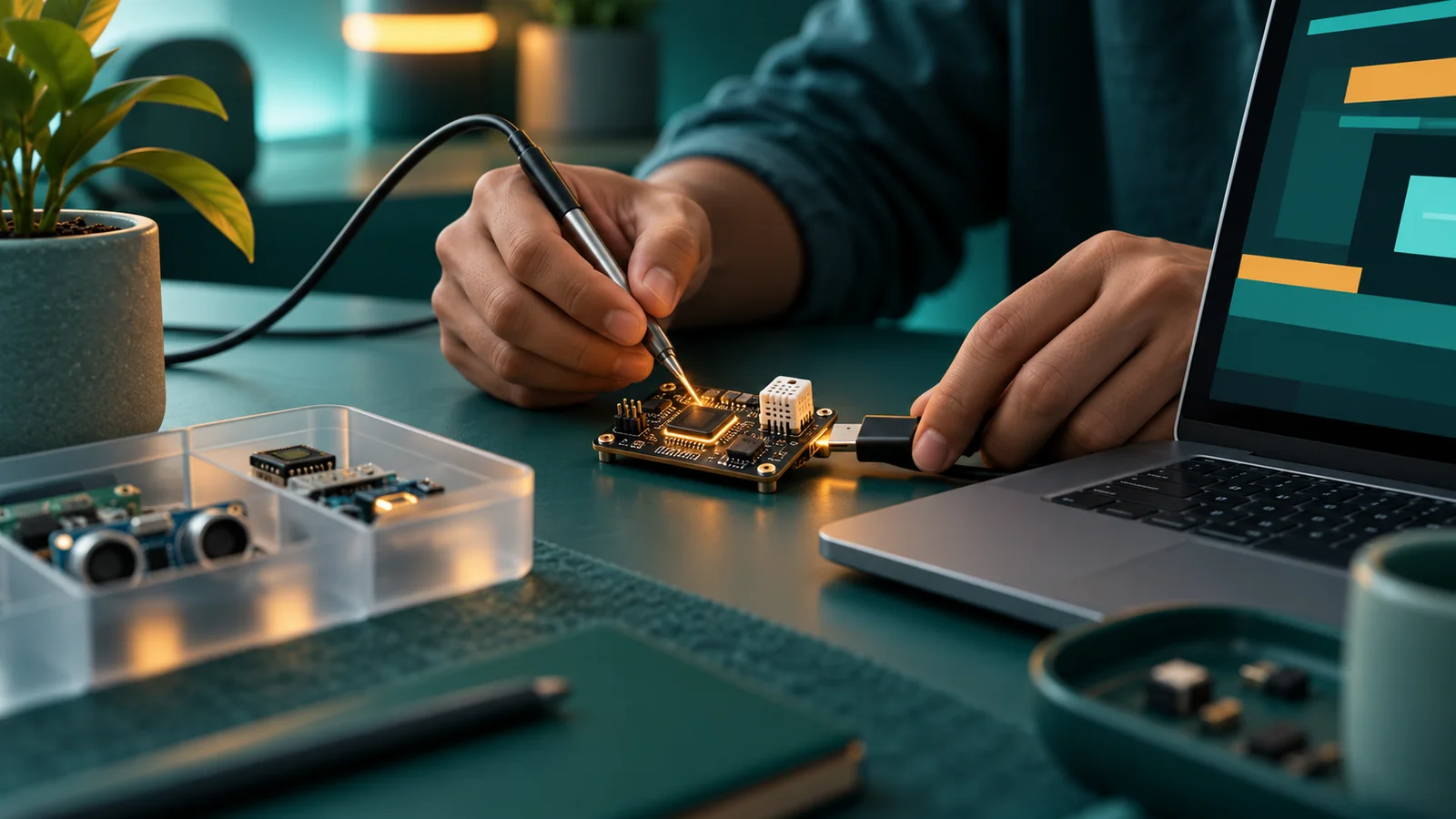
Silicon Labs opened the Simplicity AI SDK public beta on October 7, 2026. It lets GitHub Copilot, Cursor, and Codex use context from Silicon Labs devices, documentation, and tools. For IoT teams, it can reduce setup and debugging work. However, initial official support focuses on Bluetooth Low Energy, so teams must not treat it as automation for the full embedded lifecycle.
Simplicity AI SDK is a structured access layer that gives AI coding assistants Silicon Labs-specific context. This context includes SDKs, documentation, development tools, and connected hardware. It targets practical tasks such as project creation, configuration, build, flash, debug, network and power analysis, documentation search, and hardware interaction.

What changed on October 7, 2026?
In its official announcement on October 7, 2026, Silicon Labs said that Simplicity AI SDK entered public beta. The beta supports GitHub Copilot, Cursor, and Codex. Its first officially supported experience focuses on Bluetooth Low Energy.
| Component | Status on October 7, 2026 | Operational effect |
|---|---|---|
| Simplicity AI SDK | Public beta | AI assistants get SDK, documentation, tool, and hardware context |
| Bluetooth LE open-source community | Beta | Teams can review samples, raise issues, and propose pull requests |
| Databricks MLOps | Initial tools available | Device data, training, profiling, and governance can share one workflow |
| Hardware Intent | Alpha planned for January 2027 | Teams must not include it in current production commitments |
Silicon Labs also introduced Simplicity Design Intelligence. Its first capability, Hardware Intent, is designed to read product requirements, board schematics, data sheets, and meeting notes. It then compares pin, peripheral, and software configuration with the original intent. The same October 7, 2026 source says that the Hardware Intent alpha is planned for January 2027.
Which teams are affected?
The change is most relevant to teams that build sensors, smart-home devices, industrial IoT products, or Bluetooth LE prototypes with Silicon Labs chips. Software, firmware, hardware, and ML engineers can work from related context, but the team must keep verification duties separate.
Teams that use other silicon vendors do not receive a direct benefit. A team without hardware tests, a power baseline, and a review process will not become faster only because an AI assistant can access more tools.
How does it affect cost and measurement?
The possible saving does not come from token price. It comes from less time spent searching documentation, repeating configuration, and moving results between tools. The Silicon Labs announcement on October 7, 2026 gives no measured reduction in time, cost, or board respins. Each team must build its business case from project data.
Measure four metrics before and after the beta: time from project creation to the first successful build, number of flash or configuration failures, debug time per issue, and power use in the same test scenario. Add human review time and model cost. This prevents a faster coding step from hiding higher QA cost.

The Databricks integration can connect fleet data, model training, embedded optimization, and hardware test results in a governed workflow. Silicon Labs said on October 7, 2026 that ML Profiler gives directional feedback about model fit, memory, and CPU needs. Teams must still verify the result on real hardware.
What should a team do this week?
- Select one Bluetooth LE board and one small use case. Do not start with a live product.
- Record baseline build, flash, debug, and power-test times before the AI assistant is used.
- Limit agentAI agentAn AI program that performs work steps by itself, for example reading a message, drafting a reply, and recording the result.Open the glossary access to the required repository, documentation, and test devices.
- Require human review for pin, peripheral, security, and firmware-release changes.
- Compare results after 5–10 similar tasks. Stop the pilot if errors or review time increase.
This method follows the Rama Digital Business OS approach: agents operate with roles, approvals, and audit trails. If your team has no baseline or access boundary, start with an AI Diagnostic to map one safe workflow.
Frequently asked questions
Is Simplicity AI SDK ready for production?
It is a public beta as of October 7, 2026. Test it in a limited environment. Do not make it the only production build or debug path.
Which AI coding assistants are supported?
Silicon Labs named GitHub Copilot, Cursor, and Codex in its October 7, 2026 announcement.
Are all wireless technologies supported?
No. Initial official support focuses on Bluetooth Low Energy.
Is Hardware Intent available now?
No. Silicon Labs plans an alpha release in January 2027.
What is the correct operational decision?
Run a small pilot with baselines and human approval. Do not move a live project until build results, power use, and review time show a consistent improvement.
Operational conclusion
Simplicity AI SDK moves AI coding assistants closer to hardware and embedded workflows, not only source code. The practical decision is to test one Bluetooth LE workflow, measure time and errors, and expand access only after the results are consistent.